 by
by There are many ways to play Yu-Gi-Oh! and the playstyle of your deck is usually dictated by the main archetype in your deck. Each playstyle plays at a different pace with different win conditions. Often times, the line between certain playstyles is very thin and makes it hard to label a deck.
Here is every playstyle in Yu-Gi-Oh! ordered from fastest to slowest:
FIRST TURN Kill (FTK) Decks
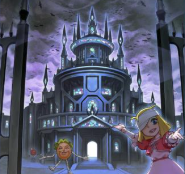
Ftk decks are exactly what they sound like, they go first and win the same turn, usually through effect damage. Ftk decks are the pinnacle of combo decks, as they have the highest possible ceiling in the game. However, this doesn’t come without a cost. In this case, the cost is being incosistent and fragile. Ftk decks appeal to the player who doesn’t want to let their opponent activate a single card, and because these kinds of decks usually result in un-interactive games where the result is literally decided by a coin flip, they are generally disliked by the community. The main ftk decks are Gimmick Puppet, Telefon FTK, and Six Samurai.
Not all ftk decks win through effect damage though. Some ftk decks put the opponent in a position where they are unable to do anything. One way to do this is to hand rip, or remove cards from your opponent’s hand, until they have no card in their hand. This puts the opponent in a position where they are unable to do anything and just have to concede. The main example of this type of ftk deck is Danger! Darkworld, where they hand rip the opponent for 6 cards. Other ftk decks can try to win with alternate win conditions. The main example of this type of ftk is Exodia ftk, where the Exodia player draws through their whole deck to draw all 5 pieces of exodia.
Combo Decks
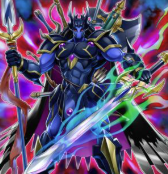
Combo decks have the second highest ceiling in the game, only losing to ftk decks. The goal of a combo deck is to perform a combo, as the name would suggest, and end on a big end board. A big end board refers to an end board that has a lot of interaction for the opponent to play through. They then use this big end board to completely stop the opponent from playing the game. Alternatively, they can make a tower, an unaffected monster, and survive until their next turn, on which they clear their opponent’s field and attempt to otk, one turn kill. Combo decks are also somewhat disliked by some people in the player base as they see combo decks as being similar to ftk decks because they both try to win on the first turn.
An offshoot of combo decks are otk decks, which aim to go second, and win on that turn. They usually play a lot of board breakers to break their opponents board. After they break their opponents board, they normal summon their starter and perform the otk combo.
The best example of a combo deck is D/D/D as it has a long combo, big end board, and a spreadsheet. The best example of an otk deck is tenpai, as it always wants to go second and otk the opponent.
Midrange Decks

Midrange decks are the perfect balance between combo decks and control decks. This balance causes the line between midrange decks and other deck styles to be very blurry. Their goal changes depending on the playstyle of the opponent’s deck. If their opponent is playing a combo deck, the midrange player will attempt to set up an endboard which can slow down the combo player enough so that their midrange deck can outgrind the combo deck. However, if the midrange player is up against a control deck, they have to change their gameplan. Instead of trying to out-grind the opponent, the midrange player will try to blow the control player out of the water with their higher ceiling.
A great example of a midrange deck is Branded Dracotail, which has a high enough ceiling to beat control decks in a few turns, but a good enough grind game to out grind combo decks, while not exceeding in either category.
Control Decks

Control decks are the opposite of combo decks, rather than trying to hit hard and win fast, they would rather play more reactively. Rather than trying to build a big end board, control decks prefer a lower to the ground end board. Their goal is to use their very limited interaction, to slowly accumulate card advantage. Then, over the course of multiple turns, they want to leverage their card advantage to out-pace the opponent in a longer game. They also have a very strong grind game to help enable this gameplan. However, they lack explosiveness and can get ran over by faster and more explosive decks unless the control deck pilot is skilled.
In recent years, control decks have slowly been moving away from accumulating card advantage, and instead they try to run as much non-engine as they can with some control decks reaching over 20 non-engine slots.
The best example of a control deck is Primite Odion. Primite Odion plays very low to the floor, but it has access to a very good grind game and a lot of non-engine, letting it outpace most decks in a longer game.
Stun Decks

Stun decks are the complete opposite of Ftk decks. When Ftk decks try to end the game as fast as possible, stun likes to take its sweet time. The gameplan for stun consists of summoning, or activating, a floodgate like Vanity’s Fiend or Domain of the True Monarchs. Because stun tends to create un-interactive games, a majority of the player base dislikes this style of deck. Even though stun and ftk decks are polar opposites in theory, in practice, they are much closer. They both struggle with going second, they both have consistency issues, and they both result in un-interactive games, where one of the two players comes out of it feeling a bit bitter.
An example of a stun deck is Monarchs as they aim to floodgate the opponent out of the game and lack a secondary option.