
 by in
by in
One of the most important parts of Yu-Gi-Oh, also arguably the most important part, is deckbuilding. Having a good deck list can be the difference between bricking and losing or opening the nuts and winning. You can always see certain patterns when looking at topping deck lists, and this article aims to explain why cards are ran at certain ratios and when to play cards at different ratios. This article will also provide the math behind this concept in deckbuilding.
Why 40 cards?
Playing a 40-card main deck vs. a 60-card main deck is a decision that often has to be made. It was very relevant when Dragon-Link, or D-Link, was the best deck. Any 2 dragons were full combo for the deck, and the deck had multiple bricks. So, running 60 cards seems like the better idea, right? You see your bricks less often, you see any 2 dragons more often, what’s the downside. However, the 40-card variant saw more success. Why did it see more success? It saw more success because the 40-card variant saw better card more often meaning that the average hand quality was higher than in the 60-card variant. This off set the number of games it lost because it drew its bricks.
So now, it’s very clear that running a 40-card main deck is better as it results in higher quality hands and usually results in more consistency. There are exceptions to this as there are to every rule. However, if a deck goes over 40 cards in the main deck, there is usually a good mathematical reason behind it. So, don’t fall into the trap of thinking that more cards in the main deck are better. Since a 40-card main deck is better, the rest of this article will assume that your deck is playing exactly 40-cards in the main deck.
3 Ofs
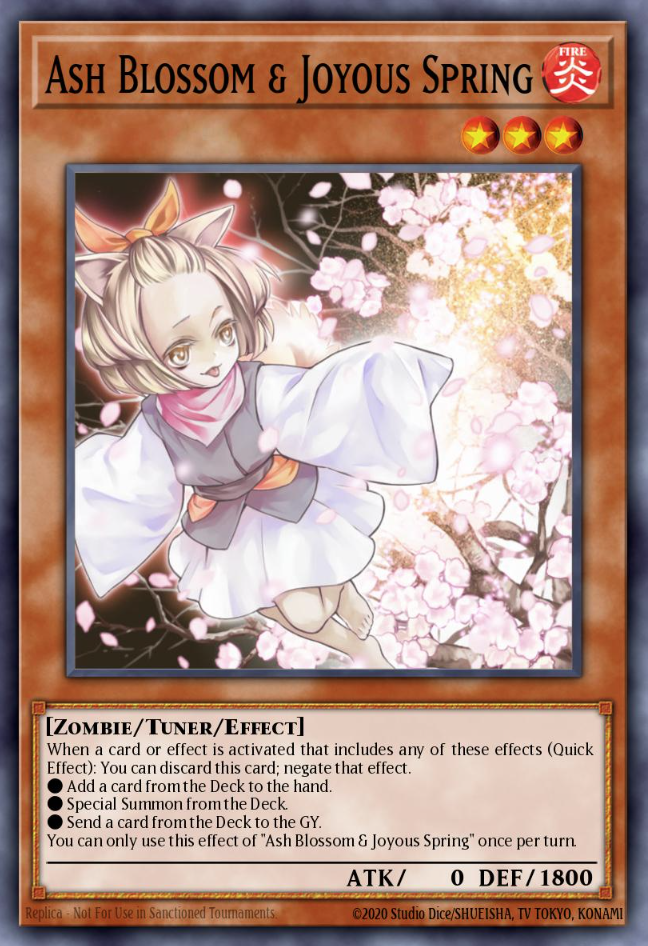
A 3 of is when you play a card at 3 copies. This ratio leads to the most likely chance of opening a card out of any other ratio, at 33.8%. This means that if you want to see a card in your opening hand, you want to play the card at 3. This includes cards such as hand traps, board breakers, combo starters, and extenders. You want to play hand traps and board breakers at 3 copies because they are your non-engine which you always want to maximize your chance of seeing. The same applies for your combo staters and extenders as they are the cards that let you play the game, so if you don’t see them in your opener, you are likely to lose. This is the most common ratio you will play your cards at as your non-engine, starters, and extenders will take up most of your deck.
2 Ofs
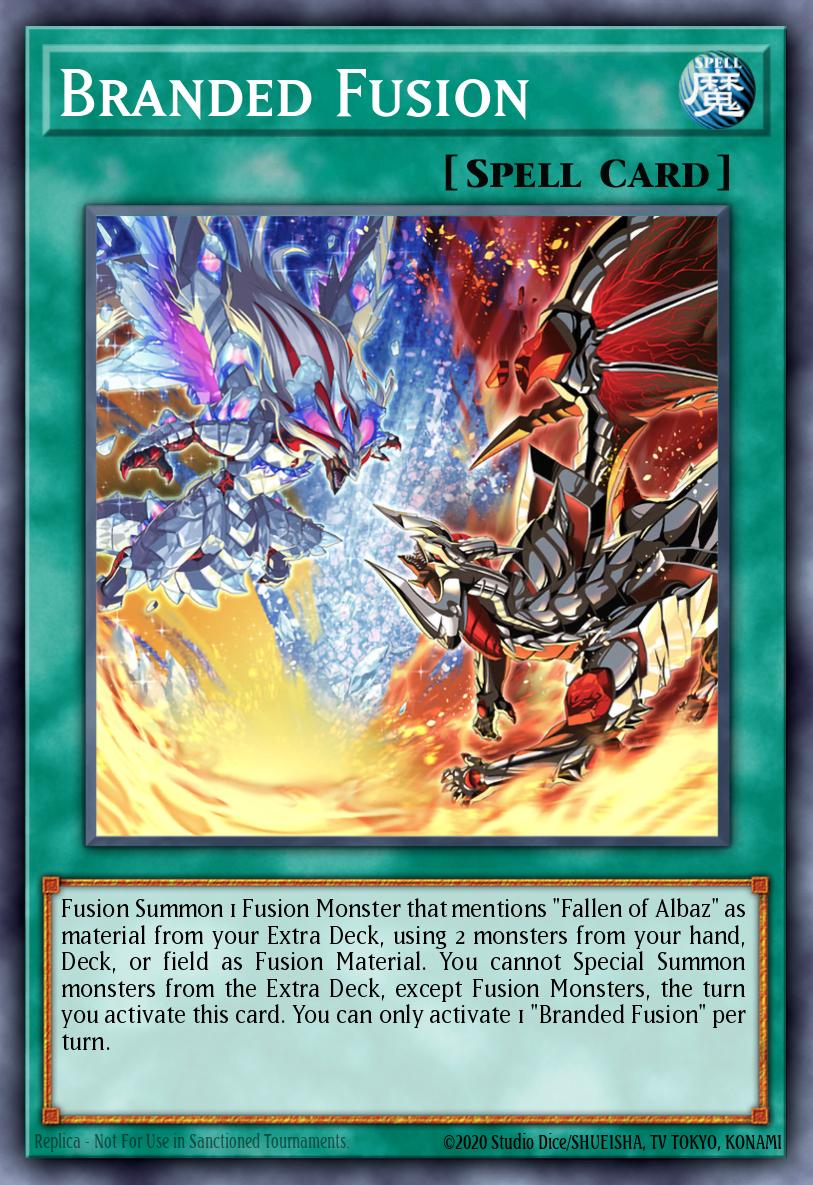
A 2 of is when you play a card at 2 copies, and it is by far the worst ratio to play a card at. This is because when building your deck, the ratio you run your card at is supposed to answer the question: “Do I want to draw this card?” and playing a card at 2 is an indecisive answer. Running a card at 2 is more consistent than running a card at 1, but less consistent than running a card 3. When you run a card at 2 copies, you have a 23.7% chance to open the card. The only time you should be playing a card at this ratio is when: when you would run 3 copies but it’s semi-limited, when you want to play 1 but you need the second one for longer and more drawn-out games, when you need 2 of the card for the main combo, or when you want to play 3 but you don’t have room to run it at 3.
1 Ofs
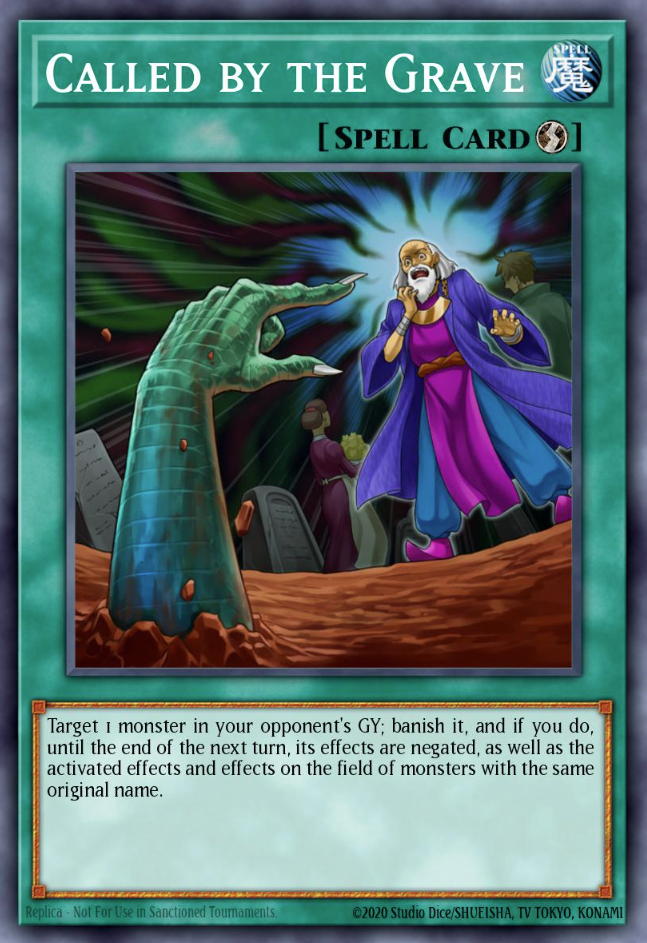
A 1 of is when you play a card at 1 copy. This ratio leads to the least likely chance of opening a card out of any other ratios, at 12.5%. This means that if you don’t want to see a card in your opening hand, you want to play a card at 1 to minimize the chance of seeing it. This includes engine requirements, bricks, or cards that you search throughout your combo that don’t help you combo. Some examples of these cards are D/D Necro Slime, Aria the Melodious Diva, Deception of the Sinful Spoils. Game-losing bricks are often called “garnets” coming from Gem-Knight Garnet because it was a mandatory card to play in the best engine at the time. However, if you drew it, the engine wouldn’t work leaving you with a few cards that do nothing.
Why play Garnets at 1 instead of 2?
This is a great question, and playing garnets at 2 seems like a great idea on the surface. If drawing the only copy of the garnet makes you lose the game instantly if you have 1, but it makes your hand awkward if you play 2, why wouldn’t you play 2? You can answer this question, like most deckbuilding related questions, by using statistics. In a small sample size, playing 2 copies of the garnet is better because you will lose less games to drawing it. However, as you play more and more games, the number of times you lose a game due to an awkward hand cause by the drawing the garnet will be more than the number of times you lose a game due to drawing the only garnet.
How Many STarters/Bricks/Non-Engine to play?
There is no one rule to how many starters vs. bricks you have to play in your deck, but it is a good rule of thumb to play somewhere between 14-18 starters and no more than 3 bricks. Playing 14-18 starters gives you a 90%-96% chance to open a starter and playing 3 bricks give you a 33.8% chance to see a brick. The reason you don’t want to play too many starters is because by playing too many starters you will lower the amount of non-engine you can play. This is assuming that you are playing a deck full of 1 card combos as the math will change depending on if the deck primarily relies on 2 card combos.
There is however a good rule for non-engine. You want to have somewhere at least 40% of your deck to be non-engine. In a 40-card deck that is about 15 non-engine slots. You want to play 15-18 non-engine because it gives you a 63%-76% chance to open 2 pieces of non-engine. This is important as you need 2 pieces of non-engine to hinder most modern decks and give yourself a chance to go second. Assuming you can fit 15 pieces of non-engine, you should play hand traps instead of board breakers. If you can’t fit 15 pieces of non-engine you should instead play board breakers as you won’t have as high of a chance to see 2 pieces of non-engine. For further reading on non-engine, you can go read this article.
These are just general rules, and each deck can get away with playing different ratios of starters vs. bricks vs. non-engine because each deck plays differently.
Ratios of different types of Starters
There are 2 different types of starters in Yu-Gi-Oh!: starters that use your normal summon, and those that don’t. You don’t want to play more than 6 of normal summon starters because they are your most fragile starters because they use up the only resource that Yu-Gi-Oh! has, the normal summon. However, if none of your starters use the normal summon you can play a secondary engine that uses the normal summon to help with resource recovery or extending through handtraps.