 by in
by in
Overview
Spell Cards are a very important part of Yu-Gi-Oh! These cards help the player achieve many things. Gaining Life Points, inflicting damage to your opponent, summoning monsters, drawing cards, destroying cards, all kinds of different effects! There are also different types of Spell Cards. This article will help explain the different Spell Card types and what they mean.
Spell Cards are separated into different categories or types. These types are indicated by the symbol on the card located under the card’s name. These types are Normal, Quick-Play, Field, Continuous, Ritual, and Equip. Each of the types of Spells work differently. Let’s take a look!
Normal Spell Cards
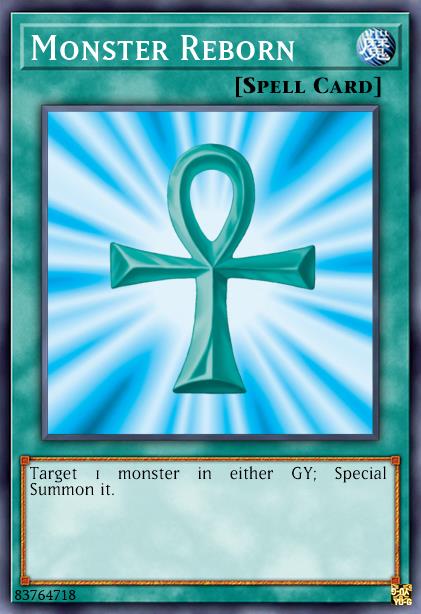
Normal Spell Cards actually do not have a type symbol. Instead, these cards simply read [Spell Card]. This is the most basic type of Spell. Normal Spell cards are activated on your turn simply by choosing to play them in your Spell and Trap Zone. You can activate these cards by playing them, or Set them face-down for later. You cannot activate a Set Normal Spell on your opponent’s turn, like a Trap Card, but you can Set them if you want to bait your opponent or if perhaps you have too many cards in your hand. Examples of Normal Spell Cards include Monster Reborn, Pot of Avarice, Unexpected Dai, Original Sinful Spoils – Snake-Eye, Branded Fusion, Polymerization, Book of Life, and Dark Hole.
Quick-Play Spell Cards

Quick-Play Spells are designated by their lightning bolt symbol. These Spells are a standout type of card. Unlike other Spell Cards, Quick-Play Spells CAN be activated during your opponent’s turn. Similar to a Trap Card, you can Set a Quick-Play Spell and activate it during your opponent’s turn. Quick-Play Spells can also be activated during a Chain, unlike other Spells that often have to start a Chain. Spell Cards generally need to already be face-up on the Field to activate during a Chain, such as Continuous Spell Cards or Field Spells. Some Spells even activate in the GY. But, Quick-Play Spell Cards can be activated from the hand, as well as when face-down during your opponent’s turn. Quick-Play Spell Cards can act as a great disruption or interruption during gameplay, such as using Called by the Grave to negate Ash Blossom & Joyous Spring. Other popular Quick-Play Spell Cards include Mystical Space Typhoon, Crossout Designator, Super Polymerization, Book of Moon, Forbidden Droplet, and many of the Runick and Radiant Typhoon cards.
Field Spell Cards
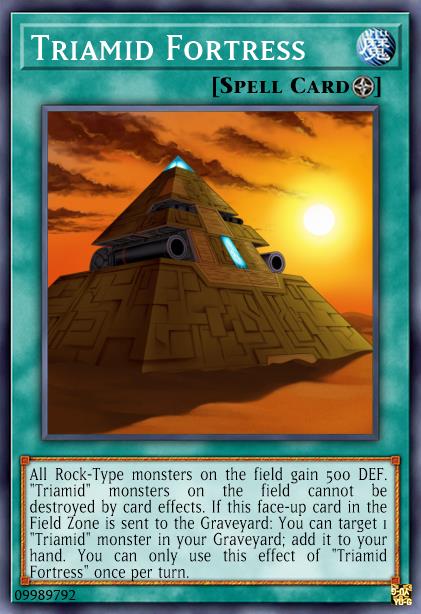
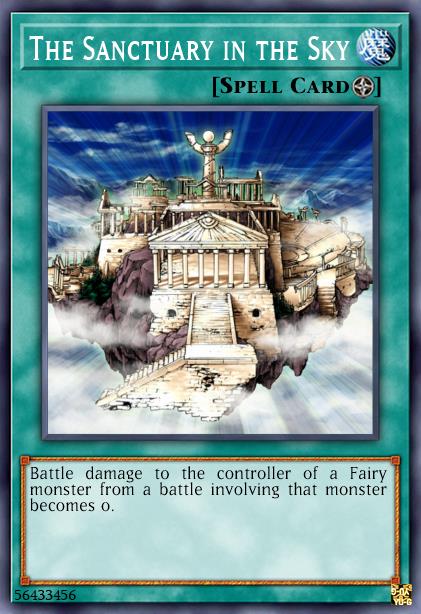
Perhaps the most unique Spell type is Field. These cards are labeled with a compass rose symbol. The cool thing about these cards is that they impact or affect the entire Field. Also, both players can use them! Field Spells often have powerful effects that greatly change gameplay in some way. There is also a specially designated space on the playing field for these cards called the Field Spell Zone. Both players have a Field Spell Zone where a Field Spell remains face-up and active until it leaves the Field. Each player can only have one Field Spell active at a time. Some Field Spells have passive effects that affect both players, like The Sanctuary in the Sky. Other Field Spells have effects that can be activated by either player during their turn, like Chicken Game. While there are many different Field Spells in the game, some archetypes actually have strategies that center almost exclusively on the use of Field Spell Cards such as Triamid, Ashened, Gravekeepers, Earthbound, and Dream Mirror. Field Spells boast cards such as Necrovalley, Umi (in its many variations), Mound of the Bound Creator, Obsidim, the Ashened City, Delta of Invitation, Zombie World, and Fire King Island.
Continuous Spell Cards
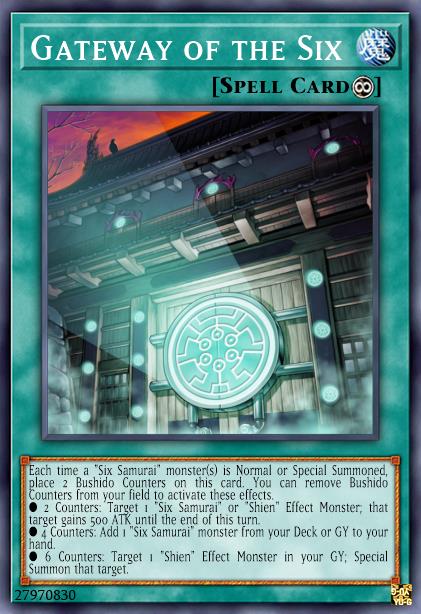
Continuous Spell Cards, marked with a lemniscate, are almost like a fusion of a Normal Spell and a Field Spell. Like a Field Spell, a Continuous Spell Card remains face-up on the Field once activated; however, a Continuous Spell resides in your Spell and Trap Zone and you can have more than one active at the same time. Many Continuous Spells have passive effects, like increasing or decreasing ATK or DEF like Banner of Courage, but not always. Some have effects that you can activate on your turn and subsequent turns like Second Coin Toss. Others can gain “counters” that can be removed from the card to activate different effects like Gateway of the Six. There are also many Continuous Spell Cards that have multiple effects, like Temple of the Kings or Fortissimo. Other examples of Continuous Spells are Field Barrier, Toon World, King’s Sarcophagus, Dark Magic Circle, and Nightmare Pain.
Ritual Spell Cards
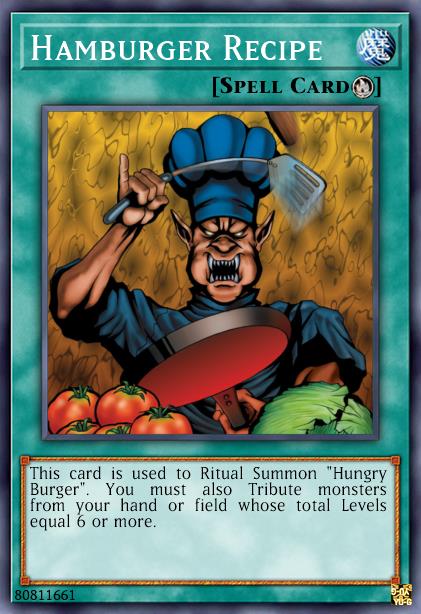
The foundation of Ritual Summoning is the Ritual Spell. Indicated by the flame icon, Ritual Spell Cards’ primary function is Ritual Summoning a Ritual Monster. One of the earliest Special Summoning methods in Yu-Gi-Oh!, Ritual Spells started off very simple. Cards like Black Magic Ritual and Turtle Oath only have one effect: Ritual Summon the monster listed on its card. To use most Ritual Spells, you have to have the Spell in your hand along with the Ritual Monster, and then have all the other required tributes. In time, as Ritual Summoning evolved and improved, additional effects were added to Ritual Spell Cards. Many of them have GY effects that help protect your board or even search out other cards. While the majority of Ritual Spells are used only for specific Ritual Monsters or archetypes, there are many generic Ritual Spells like Advanced Ritual Art and Earth Chant. Other notable Ritual Spells include Machine Angel Ritual, Sprite’s Blessing, Super Soldier Synthesis and Revendread Origin.
Equip Spell Cards
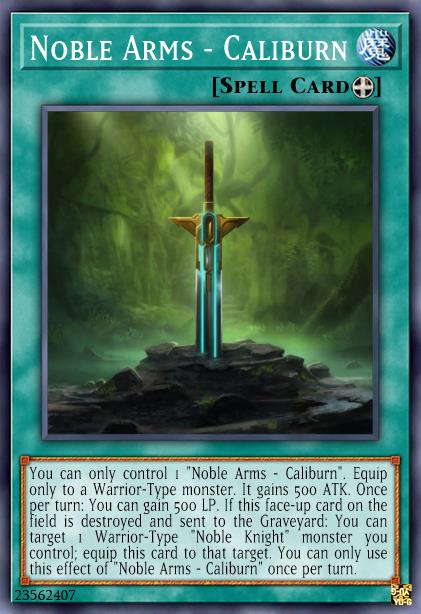
Lastly, Equip Spell Cards! Note the cross or “+” symbol on these cards. These cards are the swords, shields, helmets, necklaces, and magical trinkets that monsters can “wear” to power them up, protect them, and even more! Equip Spell Cards are Spells that must be “attached” to a monster to be used. These Spells stay face-up in the Spell and Trap Zone, and usually, they stay there until the equipped monster leaves the Field. In their simplest form, an Equip Spell Card bestows a basic stat boost, like Axe of Despair or Fighting Spirit. But others can be more complicated like Evil Eye of Gorgoneio or Kahyoreigetsu. Some allow you to Special Summon monsters, perform Fusion Summons, draw cards, and many other things. One of the coolest features of an Equip Spell Card, is the fact that you can not only equip them to your monsters, but to your opponent’s monsters, too! Why would you ever do that? Well, there are cards like Germ Infection, which lowers the equipped monster’s stats. There are even some creative uses for Equip Spells like Fairy Meteor Crush. You can equip Fairy Meteor Crush to an opponent’s monster, and when that monster attacks one of your defense position monsters, your opponent hurts themselves! The Gladiator Beasts, Noble Knights, and Mermail all make use of Equip Spell Cards in their archetypes. A few more useful Equip Spell Cards: Snatch Steal, Moon Mirror Shield, One-Shot Wand, White Veil, United We Stand, and Black Pendant.
Pendulum Cards
Shoutout to Pendulum cards! Pendulum cards are a unique type of card. While these cards act like Continuous Spell Cards while in a Pendulum Zone, these cards are actually Monster Cards, not Spell Cards, though, while in the Pendulum, they are subject to cards and effects that interact with Spell Cards, like Harpie’s Feather Duster or Vanquish Soul Pantera.
Hopefully this article has helped distinguish and explain the different types of Spell Cards and how they work. Spells are a very important part of Yu-Gi-Oh! Know your Spells, and keep on dueling!
Fun Facts!
- Yu-Gi-Oh! Spell Cards were originally called “Magic” cards. This was changed around 2003 due to trademark complications with Magic: The Gathering.
- The first Spell Cards introduced to the game were Monster Reborn, Change of Heart, Raigeki, and Pot of Greed.
- Monster Reborn has two specific, direct counters: Call of the Grave and Call of Darkness.
- Raigeki has had many retrains over the years including Raigeki Bottle, Lightning Vortex, Flash of the Forbidden Spell (because Raigeki was once on the Forbidden List), Raigeki Break, and Crystal Raigeki.
- There are two Spell Cards with “Spell Card” in their name: Spell Card “Soul Exchange” and Spell Card “Monster Reborn.”
- The Field Spell Card The Sanctuary in the Sky appears in the artwork of 13 other cards.